For most of the postwar period, the alliance rested on a bargain that was both very explicit and very carefully disguised.
The United States would provide the strategic architecture of European security: nuclear guarantees, forward-deployed forces, intelligence, logistics, command structures, and the reassurance that, if needed, the cavalry possessed aircraft carriers.
In return, Western Europe would accept a significant degree of strategic dependence. It would host bases, integrate militarily, follow Washington more often than not, and refrain from asking too loudly whether this arrangement was compatible with the sovereign equality of nations. The answer was always “yes”, provided no one stared too hard at the furniture.
The bargain worked because American predominance was generally exercised through institutions.
The United States was not less powerful because it acted through NATO, the G7, the IMF, bilateral defence agreements, and the dense semi-formal habits of Western consultation. It was more powerful because its power was laundered through procedure.
Hegemony became alliance management. Command became coordination. Dependence became partnership.
European states could accept their subordinate position because it did not usually announce itself as subordination. It arrived in communiqués, summit statements, interoperability exercises, burden-sharing targets, and the solemn prose of “shared values.” It is amazing what can be made palatable once placed in a joint declaration.
This was the genius of the postwar hegemonic bargain. It did not eliminate hierarchy; it civilised hierarchy. The United States occupied the commanding heights of the Western order, but it did so in a form that allowed European governments to present themselves as co-authors of policy rather than clients.
This presentation was never wholly false. European states did possess agency. They negotiated, resisted, delayed, shaped, and occasionally refused.
France left NATO’s integrated military command in 1966. Germany cultivated Ostpolitik. Italy became a key logistical platform while maintaining a domestic political culture in which large portions of the electorate were deeply sceptical of American power.
The Atlantic alliance was neither a prison nor a seminar in sovereign equality. It was a hierarchical order with unusually good manners.
What has changed in the current situation is not simply that the United States is behaving more aggressively, or that Donald Trump is more vulgar than the men whose monuments still look out over Washington with marble self-satisfaction.
American hegemony is increasingly being detached from the institutional forms that made it tolerable. It is becoming more personal, transactional, and openly coercive. That is the central transformation at issue here.
The old bargain said: accept American leadership because it is embedded in institutions that give allies voice, predictability, and protection. The emerging bargain says something closer to: demonstrate loyalty or discover what dependence means when the gloves come off.
The recent dispute between Italy and the United States over the use of American bases during the war with Iran communicates this transformation.
On the surface, it is a dispute over facts. Contrary to Italian Prime Minister Giorgia Meloni’s statements that Italy would not get involved in the war against Iran, Nato Secretary General Mark Rutte disclosed that hundreds of American aircraft had taken off from bases in Italy in support of the US-Israeli campaign.
The Italian government immediately pushed back, insisting that it had authorised only technical and logistical support, not combat operations. Defence Minister Guido Crosetto was especially forceful, arguing that Rutte had blurred a distinction that mattered constitutionally, politically, and legally. Italy, Rome insisted, had not joined the war.
That distinction may sound narrow, even lawyerly, and in one sense it is. But lawyerly distinctions are where sovereignty goes to survive when raw power gets hungry. And Crossetto’s denials sounded insincere, even to supporters of the Italian premier.
The question is not only whether planes departed from Italian soil. The question is what kind of authorisation was given, for what purpose, under whose command, and with what political meaning.
A fuel stop is not a declaration of war. Maintenance support is not participation in a bombing campaign. Permission for technical activity is not necessarily endorsement of strategic escalation. These distinctions are not evasions; they are the thin membrane separating alliance obligation from automatic complicity.
Rutte articulated a view of the Atlantic alliance as an integrated military machine. From that perspective, Italy is part of the platform. American aircraft operate from American facilities on Italian territory; those facilities are embedded in the broader NATO ecosystem; therefore, Italy has supported the mission.
This is not an irrational view. It may even describe the operational reality more honestly than Rome would like. But that is precisely the problem.
Operational integration and political authorisation are not the same thing. The more tightly integrated the military system becomes, the harder it is for host governments to preserve the political fiction that they remain entirely in control of how their territory is used. The fiction is useful. It may even be necessary. But in moments of crisis, useful fictions tend to develop stress fractures.
Italy’s reaction was therefore not merely an exercise in domestic damage control, though it was certainly that. It was also an attempt to reassert the political terms of the bargain. Hosting American bases does not mean granting the United States a blank check. Being a NATO ally does not mean participating in every American war. Atlanticism does not mean that Italian territory becomes an extension of presidential discretion in Washington.
The Italy case reveals the strange status of American bases in Europe. They are neither simply American nor simply local. They exist through bilateral agreements, NATO arrangements, secret protocols, logistical habits, and decades of accumulated strategic common sense. They are fixed installations and political abstractions at the same time. They sit on Italian soil but belong to the American war machine; they are defended as instruments of collective security but can become instruments of unilateral action; they are domestically invisible until they become explosively visible.
They are, in short, liminal spaces of sovereignty. In ordinary times, this ambiguity is a feature. In extraordinary times, it becomes a constitutional provocation.
This is why the old hegemonic bargain depended so heavily on predictability. European states could tolerate American power because they believed, or at least hoped, that it would be exercised through stable procedures. The United States might lead, pressure, cajole, and occasionally bully, but it would do so within a framework of consultation.
That framework mattered because it transformed dependence into something that could be narrated domestically as a partnership. A government could say: we have been consulted, we have participated in the decision, we have acted within our alliances, and we have protected national interests.
Everyone knew this was partly theatre. But politics is no less real because it requires staging.
Trump’s conception of alliance politics places enormous pressure on this older arrangement. He does not speak the language of institutional hegemony. He speaks the language of personal loyalty, tribute, and reciprocal favour. For him, allies are not partners but customers, dependents, ingrates, or friends, depending on the hour and the lighting.
This does not mean that previous American presidents were disinterested custodians of international law. The United States has always expected deference.
But there is a difference between hegemony that hides hierarchy behind institutions and hegemony that flaunts it.
If American power is institutional, European alignment can be presented as strategic prudence. If American power is personalised, alignment begins to look like subordination to the temperament of a single man.
Under the old bargain, European leaders could say they were committed to the alliance. Under the new one, they are increasingly being asked to prove their commitment to Trump. Even the most enthusiastic Atlanticist should be able to see the distinction, provided the enthusiasm has not eaten the relevant parts of the brain.
Italian Prime Minister Giorgia Meloni’s predicament is revealing precisely because she is not an anti-American neutralist, a Gaullist romantic, or a left-wing critic of NATO. She is a right-wing Atlanticist who has invested heavily in relations with Washington and in a pro-NATO foreign policy.
Meloni has been supportive of Ukraine, cultivated respectability within Western institutions, and positioned herself as a reliable conservative interlocutor with the US president, earning her the title “Trump whisperer”.
If even Meloni feels compelled to draw a line on the use of Italian bases for the war against Iran, then the issue cannot be dismissed as the usual European peevishness about American leadership. It is a sign that the alliance’s operating assumptions are becoming politically unstable.
In the end, according to Rutte, Meloni drew no such line at all, though she pretended to do so, thereby damaging her credibility. If the NATO chief is correct, the Italian premier likely pretended to be less cooperative with Trump out of fear of Italian public opinion over Italy’s military ties to Israel.
The same point applies to Rutte. His role, in the traditional alliance script, is to keep the Americans engaged and the Europeans aligned. NATO secretaries general have long specialised in the diplomatic art of praising Washington while pretending that everyone else is equally central.
In the current situation, reassurance itself becomes dangerous. To flatter Trump by emphasising European support, Rutte risked exposing a European government to domestic accusations that it had participated in a war it had claimed to avoid. The alliance manager, trying to demonstrate cohesion, revealed the fragility of the very cohesion he was trying to demonstrate.
This is what happens when the ceremonial language of unity collides with the operational facts of dependency.
The broader European response has been predictable: more talk of strategic autonomy, more pledges to strengthen the European pillar of NATO, more statements about unity, resilience, and defence industrial capacity.
Some of this is serious. Europe plainly does need greater military capacity, especially after Russia’s invasion of Ukraine shattered the fantasy that the continent could outsource hard power indefinitely, while devoting itself to regulatory excellence and artisanal cheeses.
European strategic autonomy has always suffered from a basic contradiction: it is most urgently invoked when the United States appears unreliable, and most difficult to achieve because Europe has spent decades relying on the United States.
Dependence is not a light switch. It is infrastructure, procurement, doctrine, intelligence, logistics, and habit. It cannot be abolished by giving it a French name.
Still, the current moment may force a more honest reckoning. The question is not whether Europe can become independent of the United States. It cannot, at least not quickly, and perhaps not in the way some of its more excitable theorists imagine. The question is whether the terms of dependence can be renegotiated.
Can European states preserve the American security guarantee while limiting automatic entanglement in American wars? Can host countries maintain meaningful control over the use of bases? Can the United States still lead if it treats its allies as suspects until they are proven loyal?
The Atlantic alliance was always as much a political promise as a military one.
It organised hierarchy while softening its appearance. It reconciled European sovereignty with American predominance by embedding both in institutions that could plausibly claim to represent common interests. If those institutions remain in place, yet cease to structure the exercise of power, the alliance will be hollowed out from within.
This is the real significance of the Italy controversy. The problem isn’t simply that Rutte misspoke, or that Meloni was embarrassed, or that Trump has once again decided to practice diplomacy through humiliation. A latent contradiction has become visible.
American power in Europe depends on infrastructures that are politically multinational but operationally available to the United States. European sovereignty depends on the claim that availability is conditional, negotiated, and politically controlled. The old bargain allowed both statements to coexist. The new situation forces them into conflict.
What we are witnessing is not the collapse of American hegemony but its transformation. It is becoming less institutional, less predictable, and more willing to convert dependence into discipline.
Europe cannot afford to indulge fantasies of instant emancipation. The United States remains enormously powerful. Its military, financial, technological, and diplomatic reach still dwarfs that of any European state.
While American protection will remain indispensable in the foreseeable future, indispensability is not the same thing as legitimacy. But if Europe wants the power to withdraw its legitimation of the Atlantic alliance, it must acquire the military and logistical capabilities to do so.
Otherwise, the next crisis will look a lot worse than this one.
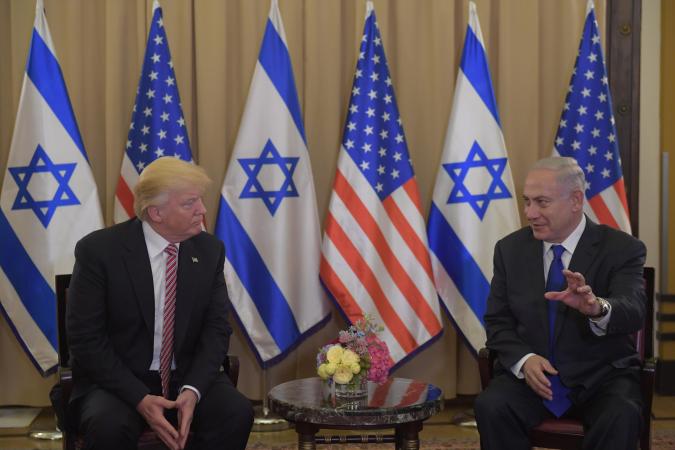
Photograph courtesy of governo.it. Published under a Creative Commons license.