The argument is straightforward: criticising the Israeli government is one thing, but protesting at a Jewish house of worship crosses the line into Antisemitism.
Organisers of these events have tried to downplay the role of illegal West Bank settlements. But the truth caught up with them.
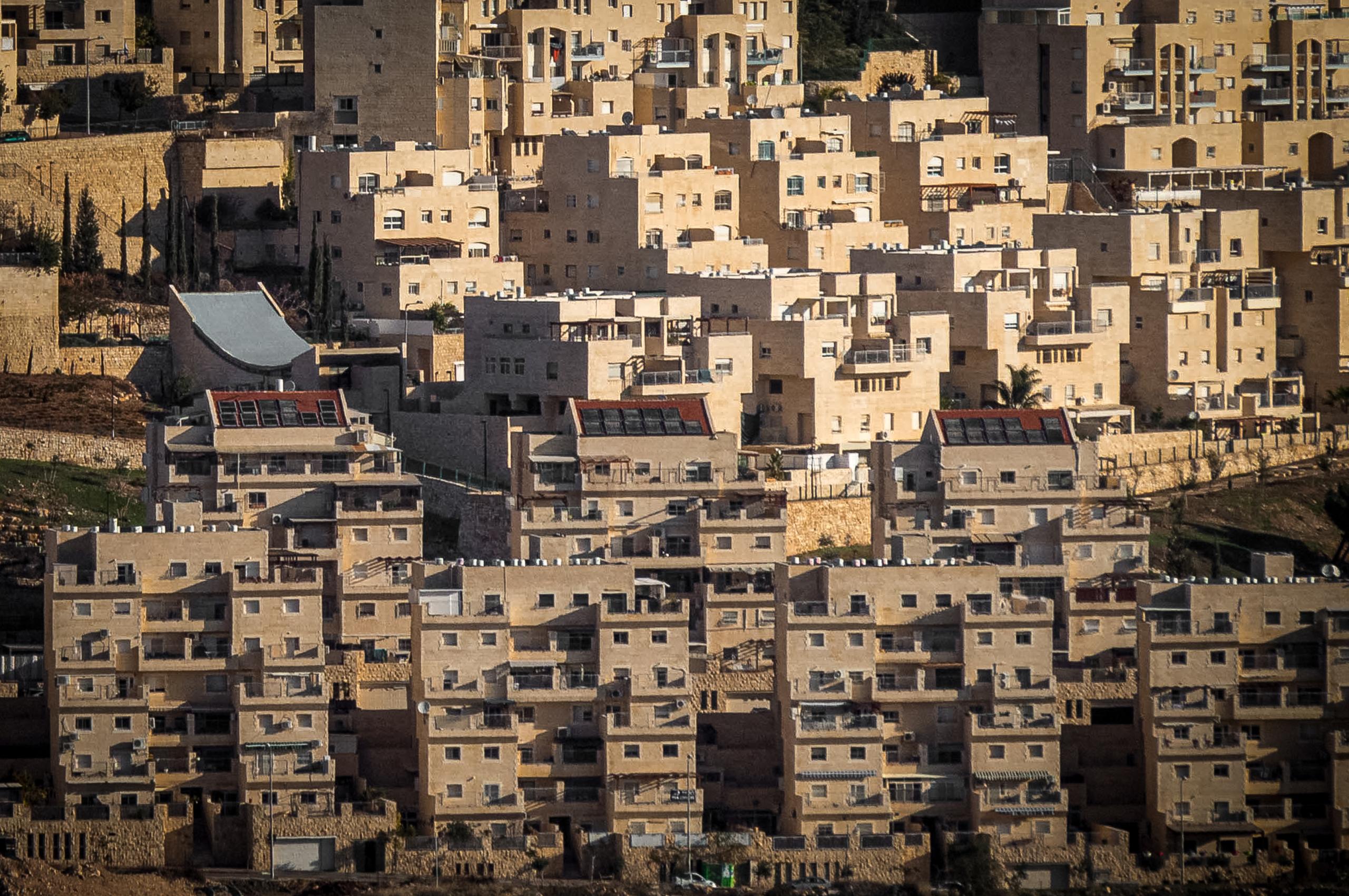
The Jewish Telegraphic Agency reported that “Organisers of the Great Israeli Real Estate Event held in London…have apologised amid revelations that the event showcased offerings in the West Bank, contradicting their assurances that it would not,” with one property owner admitting that “she had obscured the name of a city in the West Bank from a poster but also passed ‘two flyers under the table’ to attendees who expressed interest in properties in contested areas of Jerusalem”.
The New York Times, covering a parallel event in Manhattan, reported:
…several reporters for other news outlets were able to enter last week’s event, which was held at Park East Synagogue in Manhattan, one of New York’s most prominent Modern Orthodox houses of worship. They posted pictures of brochures they received inside, which advertised apartments in the West Bank settlements of Kfar Eldad and Karnei Shomron.
Researchers say the settlements have disproportionately large American populations: While American citizens account for roughly 1 per cent of the people who live within Israel’s 1967 borders, they make up 15 per cent of the people who live in the settlements.
Opposition to these events isn’t just ideological. A 2024 Times report on similar protests in New Jersey questioned their legality:
Opponents say that the shows violate United States fair housing laws because most of the properties are available only to Jews, and that the Teaneck real estate fair, because it includes properties in the West Bank, also violates international law.
In New York City, the backlash to these protests has resulted in efforts to create buffer zones around houses of worship. Resistance to these efforts has been partially successful.
A more fundamental problem remains.
These protests against land sales inside synagogues continue to be painted as Antisemitic because they occur outside a house of worship, thus affirming the reactionary talking point that anti-Zionists are actually targeting Jews generally.
Two things are possibly at work here.
One is weaponising a house of worship, still deemed sacrosanct territory in secular society, as a “gotcha” tactic. Or, hold the controversial event inside a synagogue. That way, any protester will be easier to paint as a Jew-hater.
It’s much harder to defame protesters if the event is taking place at, say, a hotel. This line of thought should be easy to disassemble.
These groups aren’t protesting synagogues during Shabbat services, or when kids are going to Hebrew school. They’re only going during these land sales.
Many pro-Palestinian Jews are at these protests. The rhetoric around them is entirely about the land sales, not the existence of synagogues or any other activities taking place there.
If the Saudi government held a business expo inside of a mosque and someone stood outside saying, “Stop chopping up journalists with bone saws,” would that person be framed as Islamophobic by politicians and the press? We’re going to guess not.
But there’s a second, more troubling problem.
While the protesters reject any religious connection between these real estate events and a house of worship, some attendees may believe that acquiring land in Israel—whether within the 1967 borders or in an illegal West Bank settlement—is a form of religious observance or a Jewish rite.
Secular scholars and commentators often point out that one problem in modern liberal discourse is that a deeply held religious belief must be respected even if it counters democratic norms, cultural openness or even established law.
A public servant refuses a gay couple their marriage license? Must we let the law violate her “deeply held” belief?
That’s the trump card we get in these types of events.
A possible buyer believes that this isn’t just an investment, but rather an act of feeding the emotional connection this person has been taught exists between the Jewish faith and the physical soil in historic Palestine.
Yet, living in a secular, democratic world means debating our ethics on secular, democratic terms.
More and more, the “Israel” that is being talked about includes the ongoing colonisation of the West Bank, proof that the religious zealotry of the settler movement has become normalised, despite being considered extreme by diaspora Zionists a generation ago.
New Yorkers and Londoners have a right to comment on sales in their cities, especially when international law is at issue.
That might mean making political and economic arguments that very much hurt if you have been taught that Israel’s land is inseparable from your religion.
But difficult conversations are a small price to pay to live in an open democracy.
Photograph courtesy of Ronan Shenhav. Published under a Creative Commons license.