They can establish associations, apply for grants, organise meetings, lobby representatives, and complain about discrimination. Some even expect their complaints to influence public policy.
For a political establishment accustomed to celebrating participation in the abstract, actual participants can be something of a nuisance. Fortunately, there is a remedy: treat participation as entryism.
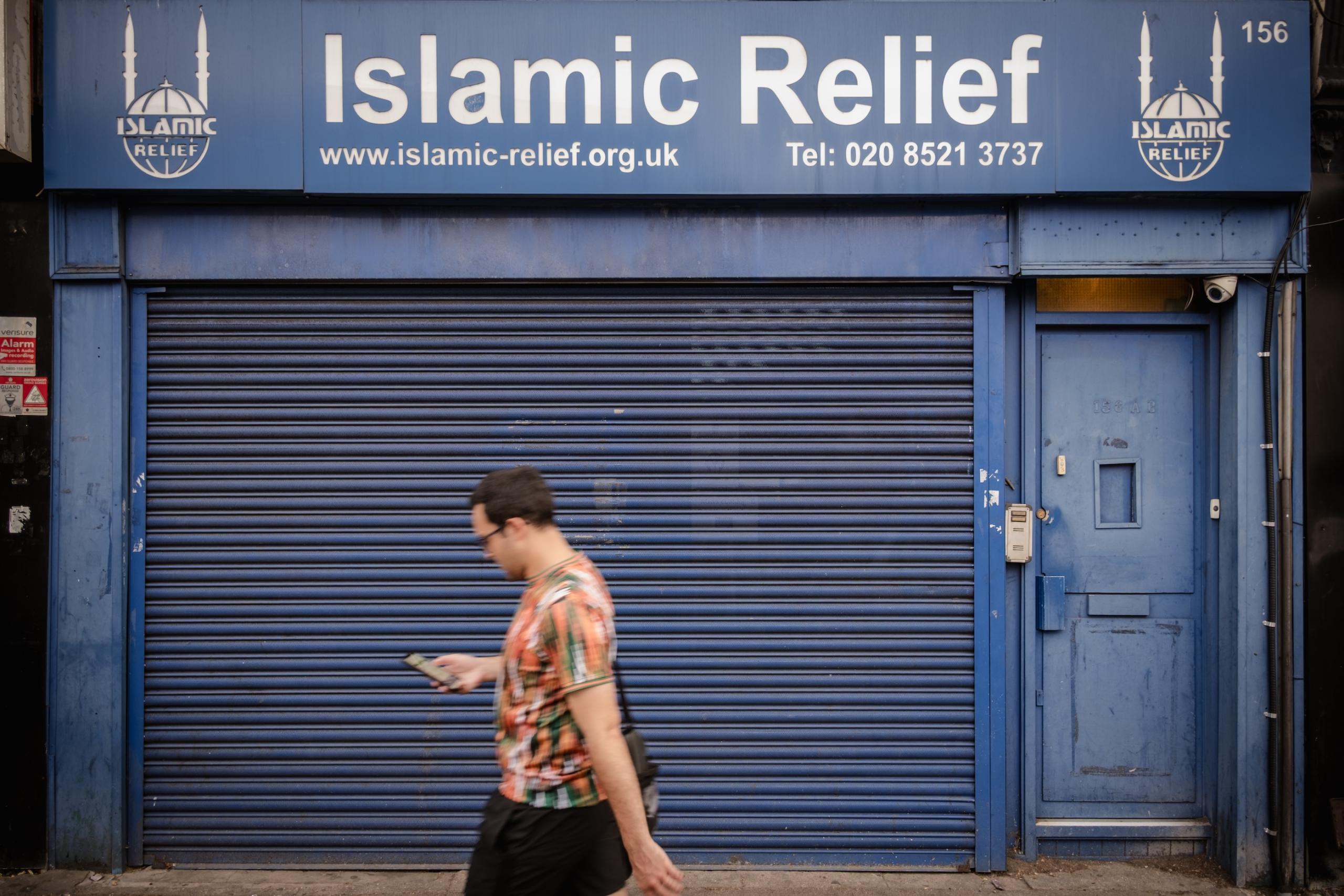
On 8 October, the European Parliament adopted a resolution on the need for an EU strategy against “Islamist entryism” and the influence of Muslim Brotherhood networks. It targets NGOs, including the European Network Against Racism (ENAR), the Forum of European Muslim Youth and Student Organisations (FEMYSO), and Islamic Relief, over alleged Brotherhood connections—which the NGOs vigorously dispute–and calls for scrutiny of their EU funding.
According to the monitoring organisation The Good Lobby, the European People’s Party (EPP) sponsored the text, and three far-right parliamentary groups and most of the liberal Renew group supported it. Social Democrats, Greens, and the Left opposed it.
The resolution reveals a European political transformation in miniature. Respectable parties are supposedly under siege, desperately defending constitutional government against extremists. Yet the EPP itself brought forward this resolution. Its cooperation with the far right fits a pattern The Good Lobby has documented across parliamentary votes.
The people supposedly maintaining the democratic firewall appear to have installed a service entrance.
The parliamentary measure followed an EPP resolution adopted in June. That document deserves attention because it explains the political reasoning here with unusual clarity.
It describes entryism as a gradual penetration of institutions and associations, using democratic language to advance an illiberal project. In response, the document proposes mapping networks, improving monitoring, ending support for implicated organisations, and coordinating intelligence. And it insists on distinguishing political Islam from religious faith and legitimate political expression.
The distinction is essential. Religious organisations can pursue authoritarian ends. They can receive covert financing, intimidate critics, or work to curtail the rights of women, minorities, and dissenters within their own communities.
None of this becomes acceptable because its practitioners experience racism. A democratic politics needs the capacity to investigate such conduct and protect those subjected to it. But that capacity depends on establishing what organisations actually do.
The politics of entryism invites a more convenient procedure: treating their publicly democratic conduct as a disguise for what investigators already suspect they secretly intend.
Once this reasoning takes hold, the evidence becomes remarkably accommodating. Withdrawal demonstrates separatism. Participation demonstrates infiltration. An association’s commitment to equality can be read as proof that it has learned the language required to conceal its hostility to equality. The accused can speak, but the accusation determines what their speech means.
This is an especially effective way of disciplining citizens whose belonging is already treated as provisional.
They are encouraged to integrate, provided integration does not involve acquiring enough collective influence to challenge the people issuing the encouragement. They may enter public life as exemplary individuals. But when they organise to contest the terms on which they live, their presence becomes a security question.
The Gaza War brings this problem into particularly sharp relief. In her Thursday Guardian commentary, Shada Islam links Europe’s response to Gaza to pressures on democratic participation at home.
This connection deserves to be pursued beyond the familiar charge of hypocrisy. Governments can survive accusations of inconsistency for a very long time. The more consequential question is what happens when citizens organise around that inconsistency and demand that it end.
A demonstration over Palestine asks who gets to set the political agenda. So does a campaign demanding changes in foreign policy, institutional investment, or public funding.
Such campaigns bring together people with different histories and commitments around demands that established parties would often prefer to manage elsewhere, later, or through a committee whose eventual findings can be welcomed without consequence.
The political difficulty grows when organisations capable of sustaining them adopt these demands. An indignant individual can be ignored. A durable coalition can make ignoring it expensive.
Security language offers a way to change the subject. When the people making demands have become the problem, those demands no longer need to be evaluated on their merits.
Their motives require investigation. Their associations require inspection. Their access to institutions requires reconsideration. A dispute over policy becomes a proceeding over political legitimacy, with one side empowered to judge whether the other belongs in the room.
The appeal of this approach is clear. No one needs to share a comprehensive authoritarian plan. A troublesome organisation loses credibility. A campaign spends its resources defending its existence. Potential allies become cautious about association. Public bodies acquire reasons to keep their distance.
This is why targeting anti-racist organisations matters beyond the fate of any particular grant.
ENAR has categorically rejected the allegations connecting it to the Muslim Brotherhood and condemned the parliamentary resolution. It has also recently lost EU funding. Crucially, ENAR does not assert that the funding decision resulted from these attacks. That distinction must be preserved. It does, however, identify the seriousness of Parliament endorsing calls to exclude it from funding and institutional access on grounds it disputes.
Civil society occupies an awkward position in the European institutional imagination. It provides evidence of democratic health, particularly in speeches about places where democracy is challenged. At home, however, this translates into risk.
Organisations may develop inconvenient ideas about their purpose. They may investigate the institutions that fund them, challenge official priorities, or insist that participation includes the possibility of changing those institutions.
The administrative response can be exquisitely polite. Nobody needs to prohibit criticism in principle. An organisation remains free to speak but loses the practical means to be heard. The paperwork can be entirely in order.
Dependence on institutional goodwill then starts to shape political conduct. Organisations learn which topics are likely to cause them trouble and which formulations reassure the people reviewing their applications. Even without explicit instruction, the prospect of exclusion disciplines effectively.
Under these conditions, freedom becomes permission renewed at someone else’s discretion. Citizens and associations retain rights, but exercising them effectively requires self-censorship. Organisations must avoid displeasing authorities they should be able to challenge.
This is a poor foundation for democratic equality. The test of a free political order is whether people can contest power without first securing the approval of those who hold it.
The parliamentary alliance that pushed through the resolution on entryism also complicates the comforting story that centrists tell themselves. They like to think that mainstream conservatives borrow far-right policies to prevent far-right victories. But what if the far right gained as much from losing political battles as it would from winning them?
When an established political family sponsors a measure directed against alleged infiltration, it gives that account of public life institutional authority. It teaches citizens what to fear and tells administrators where to look.
The far right benefits from this process even where its votes are unnecessary to a particular outcome. Its account of the political community becomes more plausible when respectable institutions adopt its premises.
Liberals can participate in this convergence too.
A politics that prizes moderation above equality is vulnerable to any argument presented as a sensible precaution. Monitoring sounds responsible. Scrutiny sounds prudent. Who could object to transparency?
Each instrument can serve a legitimate purpose. The question is how the target is selected, what evidence is required, and whether those subjected to scrutiny have a meaningful way to challenge it. Without those constraints, procedural respectability becomes a vehicle for arbitrary power.
In this account, disagreement no longer arises from competing interests, unequal treatment, or failures of representation. Citizens making uncomfortable demands become the surface expression of a hidden apparatus.
This way of thinking allows people to present their own exercise of power as politically innocent. They are merely protecting institutions. The people challenging them are the ones with an agenda.
The distinction becomes particularly problematic when established parties cooperate with forces hostile to the institutions they purportedly wish to defend. A democracy cannot protect itself by allowing governing majorities to decide that selected minorities must remain politically unobtrusive.
The relevant standards have to concern conduct. And they have to be applied consistently.
Religious identity and political inconvenience cannot substitute for evidence. Neither can the elastic notion of a connection, capable of expanding through meetings, memberships, photographs, and successive degrees of acquaintance until everyone under examination belongs to the same ominous diagram.
Unless solid proof shows that an organisation has engaged in coercion, unlawful discrimination, concealed financing, and demonstrable efforts to deprive others of their rights, it must not be excluded from democratic participation.
A system of suspicion that interprets every denial as concealment has abandoned investigation for something closer to theology.
For the left, the response to this dangerous trend requires more than asking Europe to remember its values. After all, those values are already being invoked by the people sponsoring the measures.
Freedom, equality, and democracy have little purchase when reduced to abstract principles.
The crucial struggle concerns who can exercise them, against whom, and with practical resources. A civil society composed entirely of approved partners would offer excellent opportunities for consultation and very little prospect of democratic correction.
That means that the left must defend institutions that enable sustained political action: NGOs, unions, legal organisations, and independent media. Their importance lies partly in their ability to make claims that governments do not welcome.
It also means refusing the invitation to treat Muslim citizens as a population whose collective political activity requires a special explanation. They have interests, disagreements, ambitions, and the capacity to organise around them. Their organisations should face the same scrutiny as anyone else’s, with hard evidence providing the basis for decision.
The European centre will surely continue to raise the alarm about the dangers extremists pose. Some of those warnings will be justified. But that doesn’t mean that entire swaths of the continent’s population should be prophylactically delegitimised.
A democracy in which belonging is provisional, where the right to mobilise around political demands is distributed unequally, is well on its way to becoming post-democratic.
This is what far-right extremists have been trying to achieve for years: a Europe which still professes universal values, but only defends them for particular groups of people.
Photograph courtesy of Joel Schalit. Published under a Creative Commons license.