Ronald Lauder shifts deftly among these modes, depending on the audience he’s looking to influence.
When Western panic about an intra-NATO shooting war over Greenland peaked in January, Lauder became the focus of numerous news reports, which portrayed him as the muse behind Trump’s infatuation with Denmark’s melting colonial hold.
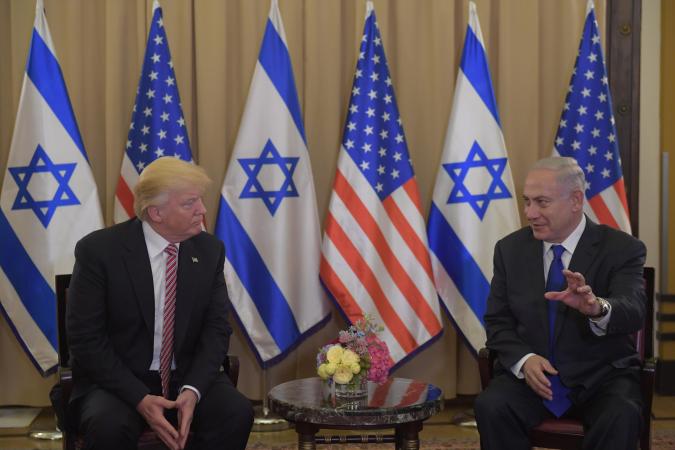
Having donated at least $1.6 million to pro-Trump organisations by 2020 and present at Trump’s second inauguration, the heir to the Estėe Lauder cosmetics fortune has the ear of the US president.
The two men approach the world with a shared mindset of business-wheeling and deal-making.
Lauder is also close to the Munich Security Conference. A Reagan-era ambassador to Austria, Lauder is an MSC regular. An associate of his, Estée Lauder’s global affairs chairman, serves on the board of the conference’s nonprofit arm in the United States.
Just one week after Trump told Davos he wanted “right, title, and ownership” of Greenland—generously, without using force— the Munich Security Conference released a statement praising Lauder’s donation to its endowment, whose mission it describes as “promoting international dialogue and mutual understanding”.
In a way, Trump’s geopolitical trash talk could be construed as an international dialogue that forged a certain mutual understanding—just not the kind that helps MSC’s street cred.
For a European organisation that positions itself as a pillar of a global security order that privileges Western interests, it’s awkward timing to take money from a donor who has played a role in threatening those interests.
The annual Munich Security Conference report, released on 9 February, had plenty to say about them.
Nonetheless, Lauder was invited to join the MSC board—a show of gratitude for his years of support. In response to an email inquiry, an MSC spokesperson said the non-partisan, independent organisation seeks a “diversity of viewpoints” but endorses none of them.
The conference kicked off just weeks after European leaders found themselves once again pushed to America’s imperial periphery by Trump. Elsewhere along the racialised international hierarchy, however, they comfortably align with him—and the whole of the US foreign policy establishment.
Here, Lauder becomes a useful bridge.
An early supporter of Benjamin Netanyahu and long-time president of the stridently pro-Israel World Jewish Congress, Lauder lends legitimacy to right-wing, anti-liberal, and anti-democratic platforms.
Conflation of Antisemitism and anti-Zionism comes naturally, and his work in Europe effectively launders European historical guilt in the service of Zionist chauvinism and Western hegemony.
The Lauder Foundation, which he set up in the 1980s, acts as a soft influence network. It presents itself as an innocuous cultural organisation working to reestablish Jewish life that Germany’s genocide wiped out. A worthy mission, but for Lauder it comes with a very particular slant: centring Israel in Jewish identity.
In status quo geopolitics, it’s a win-win: providing a stage for the morality play of remembrance while building constituencies for Israel’s multifaceted lobbying operation across Europe.
The result is a memory politics that instrumentalises notions of Jewish safety for the security interests of a particular political entity.
For democratic understandings of international law and equal rights, it’s a lose-lose.
When safeguarding Jews means complicity in the Israeli government’s genocidal and colonial violence against Palestinians, you get a zero-sum game that silences the latter under the guise of protecting the former.
The effect is anything but. Shackling all Jews, monolith-like, to the political violence of a foreign state turns them into the potential targets of political violence in kind.
Lauder personifies this process, acting as a key shaper of how European officialdom memorialises its crimes and the lessons to be drawn from them.
In 2020, Deutsche Welle, Germany’s international broadcaster, sent me to Auschwitz to cover the 75th anniversary of the camp’s liberation.
As chairman of the Auschwitz-Birkenau Memorial Foundation, Lauder received celebrity treatment there from journalists who lined up to get “exclusive” interviews, which he used to repeat the well-worn talking point about the resurgence of 1930s-like Antisemitism.
Not from Europe’s white nationalists who invented and perfected it, of course, but imported Muslim fanatics.
Standing just steps from Auschwitz’s infamous “Arbeit Macht Frei” gate, the optics for the camera teams could not have been better. Nor the relativisation more grotesque.
In his keynote, delivered at the main event that turned a site of modern human suffering into a slickly produced show, Ronald Lauder’s rhetorical grief over Jewish refugees abandoned by the world then did not extend to refugees facing the same dire circumstances now.
Instead, it’s reason to support Israel, condemn the United Nations, and throw Jew-haters—we know who they are—in jail. That’s a point his White House ally has heeded well. The EU is not far behind.
When so-called pro-European forces collaborate in this collapsing of history into strawman arguments, they are not only enabling the reactionary and exclusionary interests that conspire against them but also echoing the Antisemitism that Hannah Arendt theorised.
Christian Europe, or its modern secular heir, is not concerned about Jews, but the Jew, an abstract principle rather than living human beings.
That’s convenient; when you can only see a moral subject, not a political agent, it’s easy to deny the presence of what Arendt called “concrete noxiousness”. We might call it genocide, or other heinous acts that an emancipated people, acting politically in the world, can choose to pursue.
Abstraction serves Lauder’s interests well. Though conservative in the landscape of contemporary American politics, he is liberal in the sense that problems are individual and moral, not structural and political. In other words, the unending refrain: History is over.
When events are not the consequences of a deliberate course of action, but foregone conclusions, you are free to pursue business interests in Greenland while bemoaning the state of the world from a stage in Munich.
You can criticise Netanyahu, condemn extremist Israeli rhetoric, and write about peace without having to think about the underlying ideology you’ve underwritten that takes the other side.
European democracies are learning the hard way that nothing is inevitable. If they want to pull themselves out of the stupor of post-Cold War denialism, there must be a reckoning with how the bothsideism of the Lauder milieu keeps them trapped in a dangerous delusion.
Consistency is not a virtue. It is a necessity.
Photograph courtesy of Joel Schalit. All rights reserved.